News
Portugal lowers fuel tax ahead of another forecast price rise
Petrol and diesel averaged about €2.02 a litre on 3 September. Monday’s tax cut is worth about €1.50 on 50 litres. The final bill will also depend on wholesale costs and the station you use.
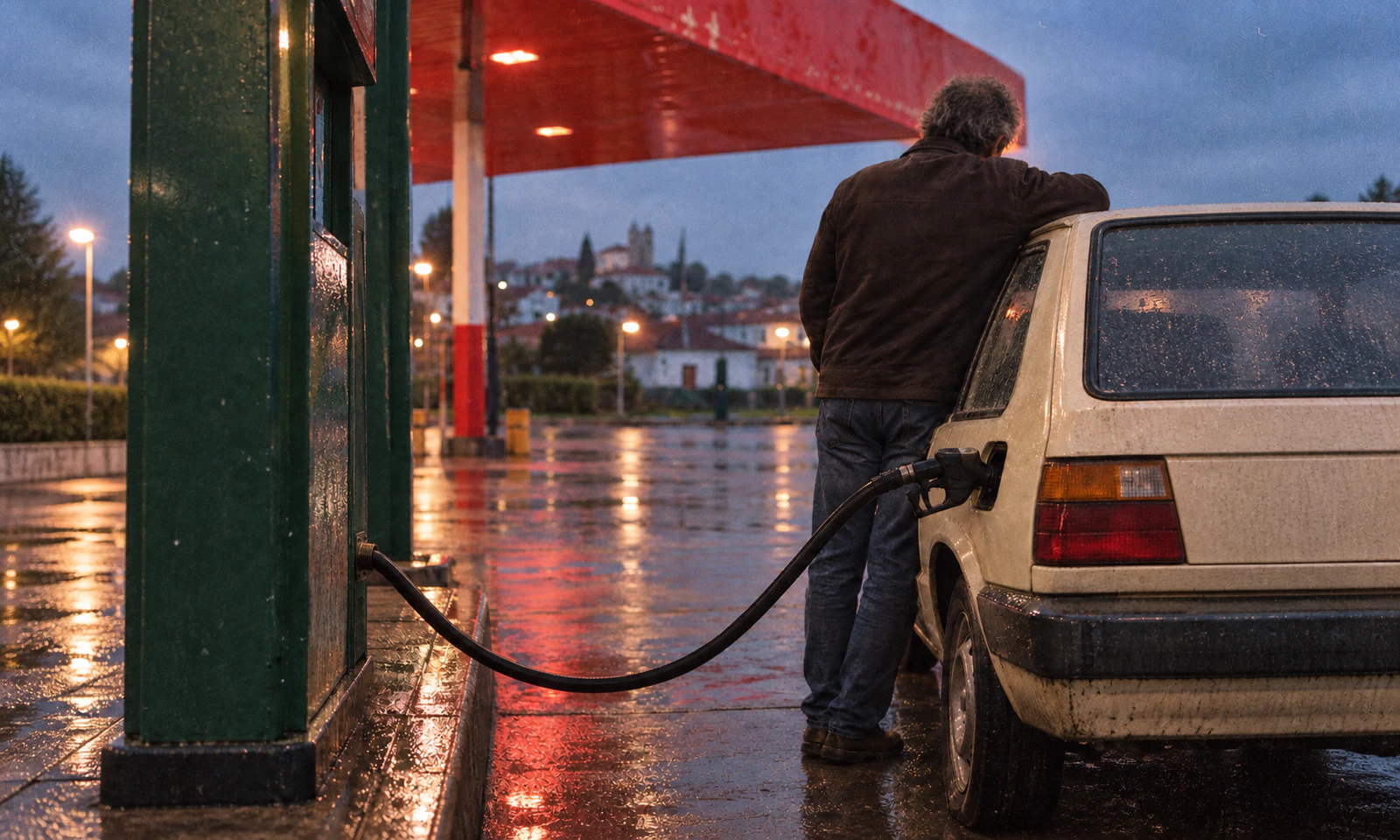
Buying 50 litres at the mainland averages recorded on 3 September would have cost €101.10 for ordinary petrol and €100.95 for diesel. The Government has approved lower fuel taxes for 7 September.
The change comes as the Automóvel Club de Portugal, or ACP, forecasts another sharp increase. Its estimate, published on 4 September, put the following week’s increase at 12 cents a litre for petrol and 15 cents for diesel. It used Thursday’s market prices, with another day of trading still to come.
For a household, the effect depends on how much fuel it needs. Someone driving long distances to work will feel the same price change more than someone making occasional trips. Choosing a cheaper station can help, although the saving shrinks when reaching it requires a special journey.
What changes on 7 September
The Government has lowered ISP, the tax charged on petroleum products, through an order published on 4 September. Compared with the rates that began on 31 August, the reduction amounts to approximately 2.93 cents per litre for petrol and 3.06 cents for diesel, including the related VAT saving.
Holding every other part of the price unchanged, a 50-litre purchase carries about €1.47 less tax for petrol or €1.53 less for diesel under the new rates. Wholesale costs and retailers’ pricing can move in the opposite direction. The cut can soften an increase without making fuel cheaper than it was the previous week.
The reduction works through the tax included in the fuel price. Drivers have no application to submit or separate payment to claim.
What the average price includes
The Directorate-General for Energy and Geology, known as DGEG, recorded a daily average of €2.022 for ordinary petrol 95 and €2.019 for ordinary diesel on 3 September. These mainland averages give more weight to fuel sold in larger quantities and incorporate discounts, including those available to fleet-card holders.
A driver without those discounts can pay more than the average. Madeira and the Azores are outside this price series.
Portugal’s figure in the European Commission’s Weekly Oil Bulletin is the weighted price for Monday. A full-week average measures a different period, so comparing the two can give a misleading impression of how much prices have changed.
For a household budget, use the price you expect to pay after any immediate discount. The published average is a reference when you have no local price to hand.
What a month of driving costs
Consider a petrol car using 6.5 litres per 100 kilometres. This is a worked example, rather than a claim about the average Portuguese car.
Covering 1,000 kilometres takes 65 litres. At the recorded petrol price of €2.022, the monthly fuel bill is €131.43. A ten-cent price increase, with the same journeys and consumption, raises it to €137.93.
The distance travelled can change that bill much more.
A home that adds 20 kilometres to the total daily commute adds 440 kilometres across 22 working days. In the same car, at the same petrol price, that costs €57.83 more a month in fuel.
Someone comparing rents in two places needs to include that extra journey, plus any tolls and other running costs, in the household budget. The example counts 20 extra kilometres across the whole return journey. Adding 20 kilometres each way would double the fuel cost.
The calculation also works for a self-employed driver travelling between customers. Include the return home and journeys made without a paying passenger or delivery, then keep fuel separate from insurance and maintenance. The money left after buying fuel is not a measure of profit.
Actual consumption is more useful than a guess based on engine size. Measure it across several fill-ups, starting and ending with the tank filled to a comparable level. Divide the litres used by the kilometres travelled, then multiply by 100. Counting one purchase without knowing how much fuel was already in the tank will not establish consumption.
When the spending limit stays at €50
A fixed amount at the till can hide how much less fuel it buys.
At €2 a litre, €50 buys 25 litres. At €2.10, it buys about 23.81 litres. The missing 1.19 litres would have covered roughly 18 kilometres in the example car.
The driver has spent the same amount but will need to refuel sooner. A household setting aside a fixed monthly sum should check whether it still covers the journeys that must be made, rather than judging the increase only by the amount on each receipt.
For someone who cannot change their commute, reducing the fuel bill depends on finding a better effective price or using less fuel for that journey. Advice to drive less offers little immediate help when work hours and available transport leave no workable alternative.
Why petrol and diesel move differently
Petrol and diesel have separate wholesale markets. In its report for 31 August to 6 September, ERSE, the energy regulator, recorded a 0.6% rise in the wholesale petrol prices used in its calculation. The equivalent diesel prices fell 4.9%.
The price of crude oil alone cannot establish the next pump price. Suppliers buy refined products whose prices can move differently, and shipping costs also enter the bill.
Taxes accounted for 48.5% of petrol’s price and 41% of diesel’s price in ERSE’s cost benchmark for that week. The benchmark combines market costs with taxes to help monitor prices. Stations are not required to sell at that figure.
Retailers choose their prices and discounts. ERSE advises consumers to compare offers because prices differ between brands and locations.
The cost of the tax relief
The Government describes the temporary ISP reduction as a way to return extra VAT revenue generated by fuel-price increases following the Middle East crisis. The mechanism compares prices with the week of 2 to 6 March. Its ten-cent threshold refers to the increase against that reference period.
The independent Public Finance Council examined the policy in its April outlook. Under its assumptions, the new discounts associated with the Iran conflict roughly offset the extra VAT generated by that shock. Including older discounts dating from the Ukraine war produced an estimated €777 million net loss of tax revenue across 2026.
That April scenario assumed the discounts available in late March would continue for the rest of the year. It was not an estimate of the cost of September’s decision. The council questioned the fiscal case for describing the accumulated relief solely as a return of additional VAT, since its calculations showed that the cuts already exceeded that extra revenue.
The help a driver receives grows with the amount bought. Someone buying 100 litres receives twice the tax reduction of someone buying 50 litres, regardless of income. The policy reduces the tax on each purchase without identifying which households face the greatest difficulty paying for essential journeys.
People who do not drive can also face higher costs. The council’s outlook warned about energy-price increases passing through production and transport into food and other goods, with food inflation placing a greater burden on lower-income households. Those effects cannot be estimated by applying a weekly diesel increase directly to a supermarket bill.
Finding a cheaper station
DGEG’s free fuel-price search lets readers select a fuel and search by district or municipality. Results are also available on a map. Entries show the reported price and its update date. Operators are responsible for updating their information, so check the pump price before buying.
For the products used in this article, select gasolina simples 95 for ordinary petrol 95 or gasóleo simples for ordinary diesel. Premium products have separate listings and should not be mixed into the comparison.
Compare the amount payable for the litres you need. An immediate discount at the till can be included in that price. A voucher for a later supermarket purchase needs to be valued separately, particularly when using it requires spending you had not planned.
A larger advertised discount can still leave a higher final price when it starts from a more expensive base. Compare the final offers after the reductions you qualify for.
When the detour uses up the saving
Suppose a station on your normal route charges €2.08 a litre and another charges €2.00. Buying 50 litres at the cheaper station saves €4 before travel costs.
Reaching it adds 12 kilometres to the total journey. A car using 6.5 litres per 100 kilometres burns another 0.78 litres on that detour. Valued at €2 a litre, the extra fuel costs €1.56.
The saving is now €2.44, before extra tolls or the cost of your time.
For a ten-litre purchase, the same price difference saves only 80 cents. Making the detour leaves the driver 76 cents worse off under these assumptions. The trip breaks even on fuel costs at a purchase of 19.5 litres, provided there are no additional tolls.
Use the extra distance beyond your normal route, including the return. A station passed during a journey you already need to make can offer the full price saving without a special trip.
Join the conversation
Add your Note
Sign in or create a free account to respond. Reading the conversation remains open to everyone.