People & Culture
Traditional Clothing in Portugal: A Visual Guide to Regional Dress
Embroidered festival clothes in Minho and woollen capes in Trás-os-Montes show how local dress grew out of work, weather and celebrations.
Portugal has no single national costume. A traje is an outfit, and its name often identifies a place, a job or an occasion. The garments below include clothes for farm work, protection from the weather and days when people dressed in their best.
Regional clothing atlas
No matching entries.
-
Traje à Vianesa
Viana do Castelo · Minho
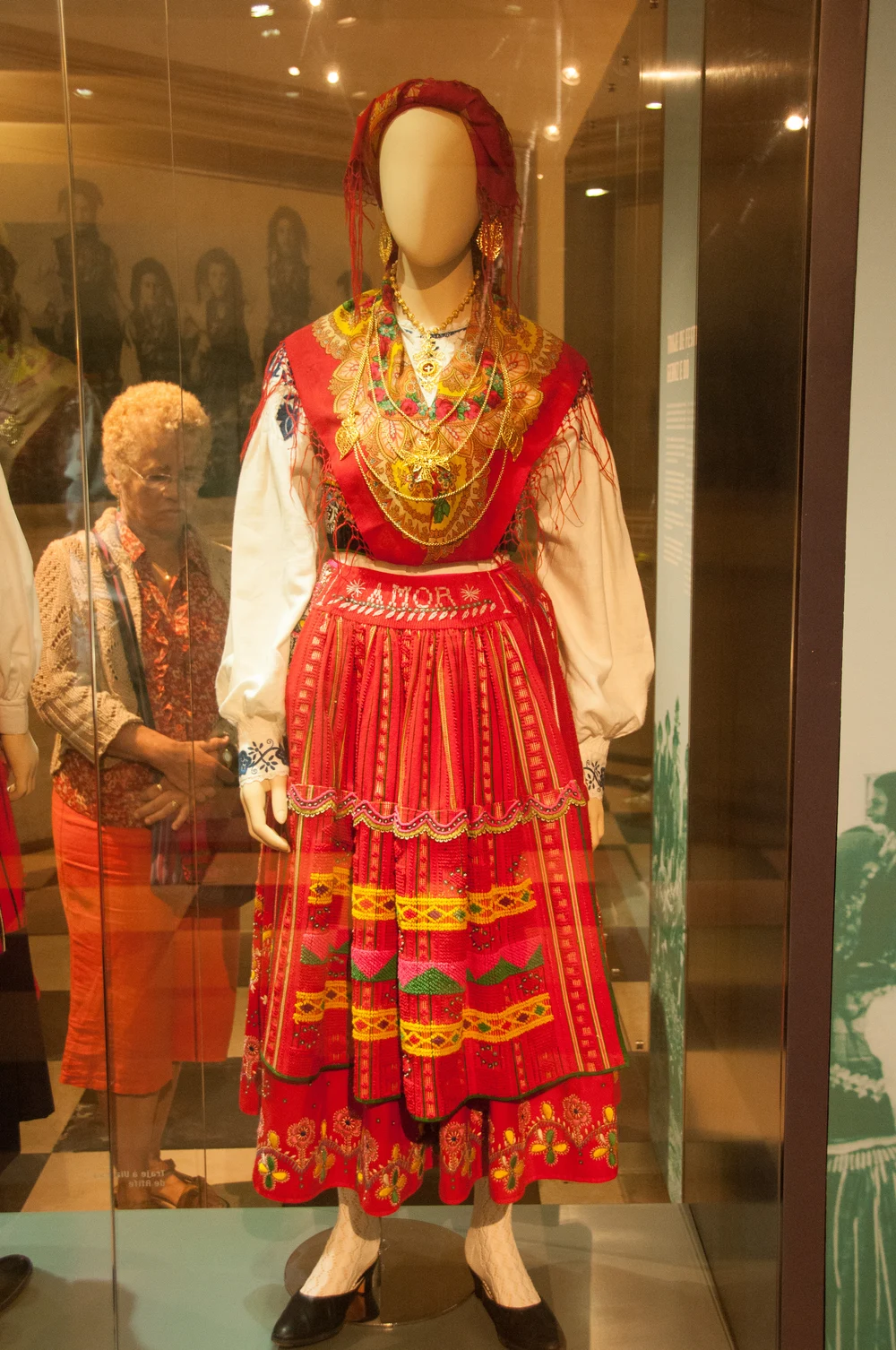
Viana do Castelo, 27 October 2012. The display shows how the blouse, fitted bodice, apron and separate pocket form different layers. Graeme Churchard · CC BY 2.0 The traje à Vianesa is associated with women of parishes around Viana do Castelo. Local colours and embroidery matter when identifying a particular version.
- Components and materials
- Embroidered linen blouse, fitted colete, wool-based skirt, apron, external algibeira pocket, scarves, cotton stockings and leather footwear. Gold chains and earrings complete festive versions.
- Who wore it
- Farming women dressed for feast days.
- Period and use today
- Documented formation in the late nineteenth century. Worn at romarias and by folklore groups today.
-
Traje da Nazaré
Nazaré · Atlantic coast
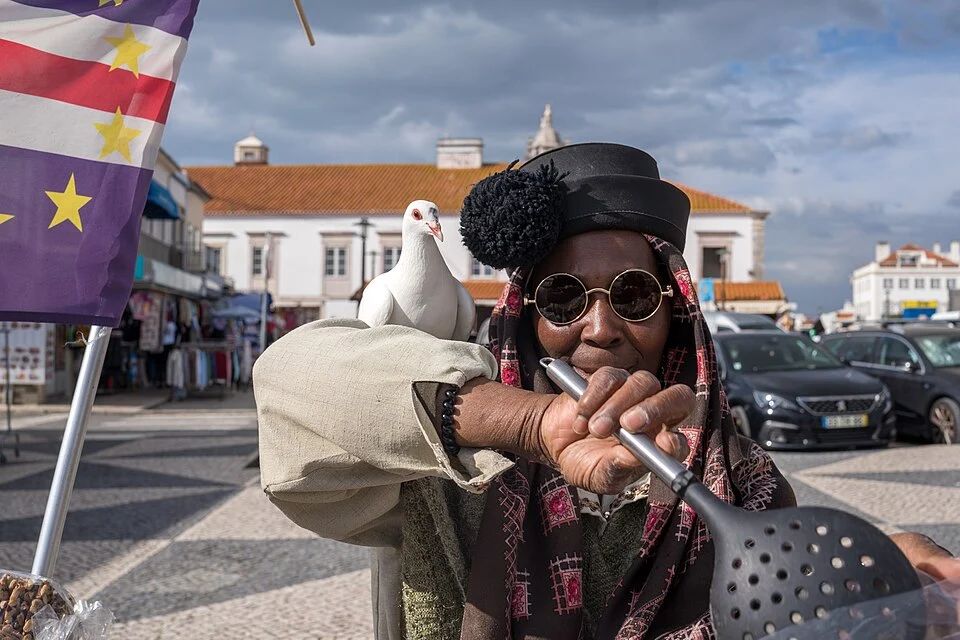
A Nazaré seller on 8 April 2026, wearing the tasseled hat over a patterned headscarf. Alexkom000 · CC BY 4.0 Nazaré’s museum distinguishes work, festive and mourning clothes. Layered skirts are a feature of the women’s dress, with seven skirts becoming its best-known image.
- Components and materials
- Layered skirts, blouse, apron and patterned scarves. Festive accessories include a hat with a large tassel and brincos à rainha, an ornate earring form. Fabrics and decoration vary by use.
- Who wore it
- Women of the fishing community. The municipality still describes this as clothing worn in local life, especially at celebrations.
- Period and use today
- Recorded in photographs from the first half of the twentieth century. Skirts and aprons became shorter as fashions changed.
-
Traje madeirense
Madeira
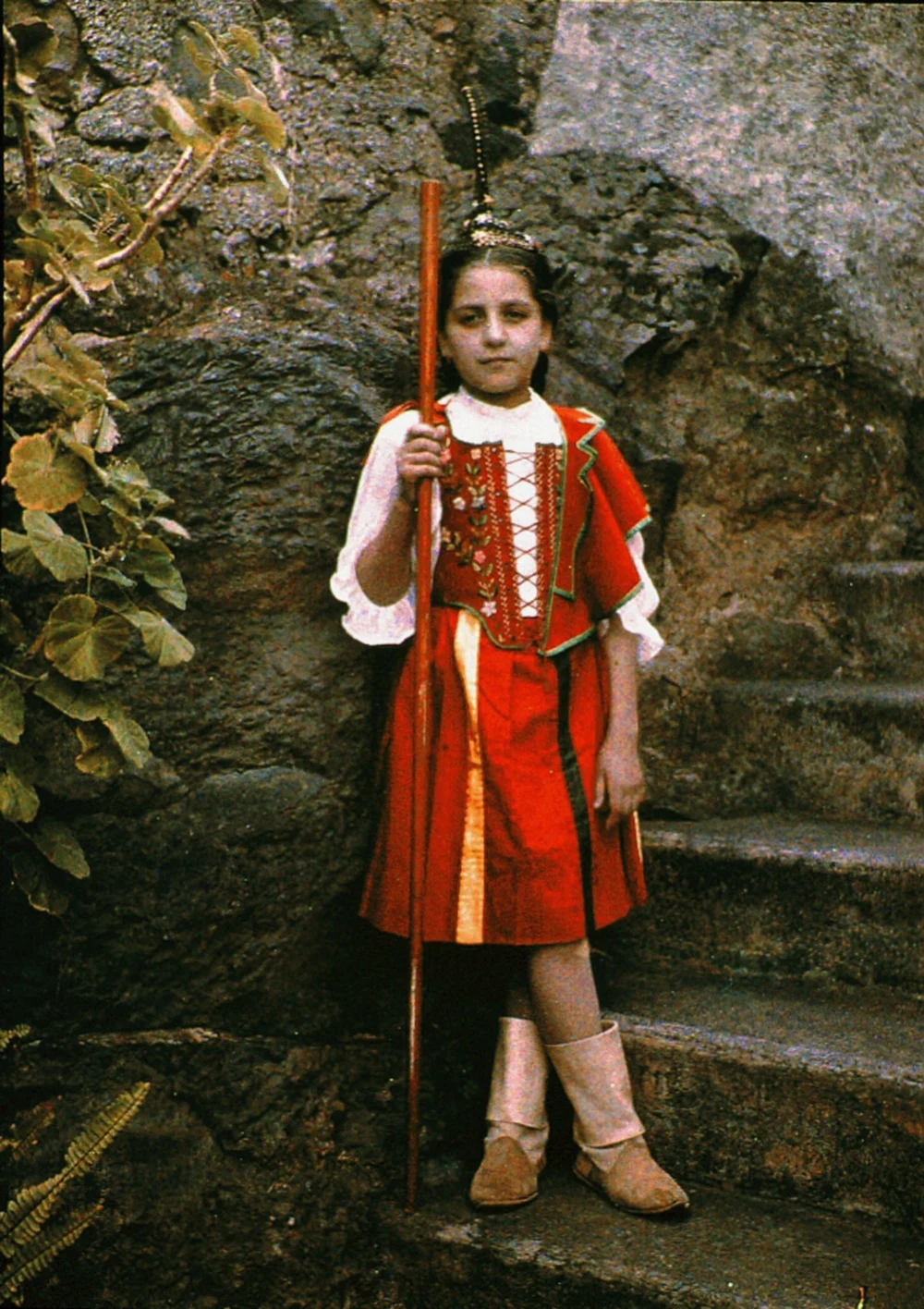
Sarah Angelina Acland’s autochrome, about 1910, shows a Madeiran child in a stiff bodice and boots with turned tops. The photograph was posed. Sarah Angelina Acland · Public domain Madeiran dress includes the pointed carapuça cap and striped skirts. Saloias taking part in Holy Spirit visits wear a ceremonial outfit that can include jewellery lent by parishioners.
- Components and materials
- Wool skirts, blouse, fitted bodice and carapuça cap appear in documented outfits. AFERAM describes bota chã footwear made with goatskin uppers and cowhide soles.
- Who wore it
- Rural women and men wore related but different pieces. Present-day folklore ensembles select particular local forms.
- Period and use today
- Nineteenth- and early twentieth-century records show variations. The AFERAM craft project teaches the making of these garments today.
-
Capote e capelo
Azores
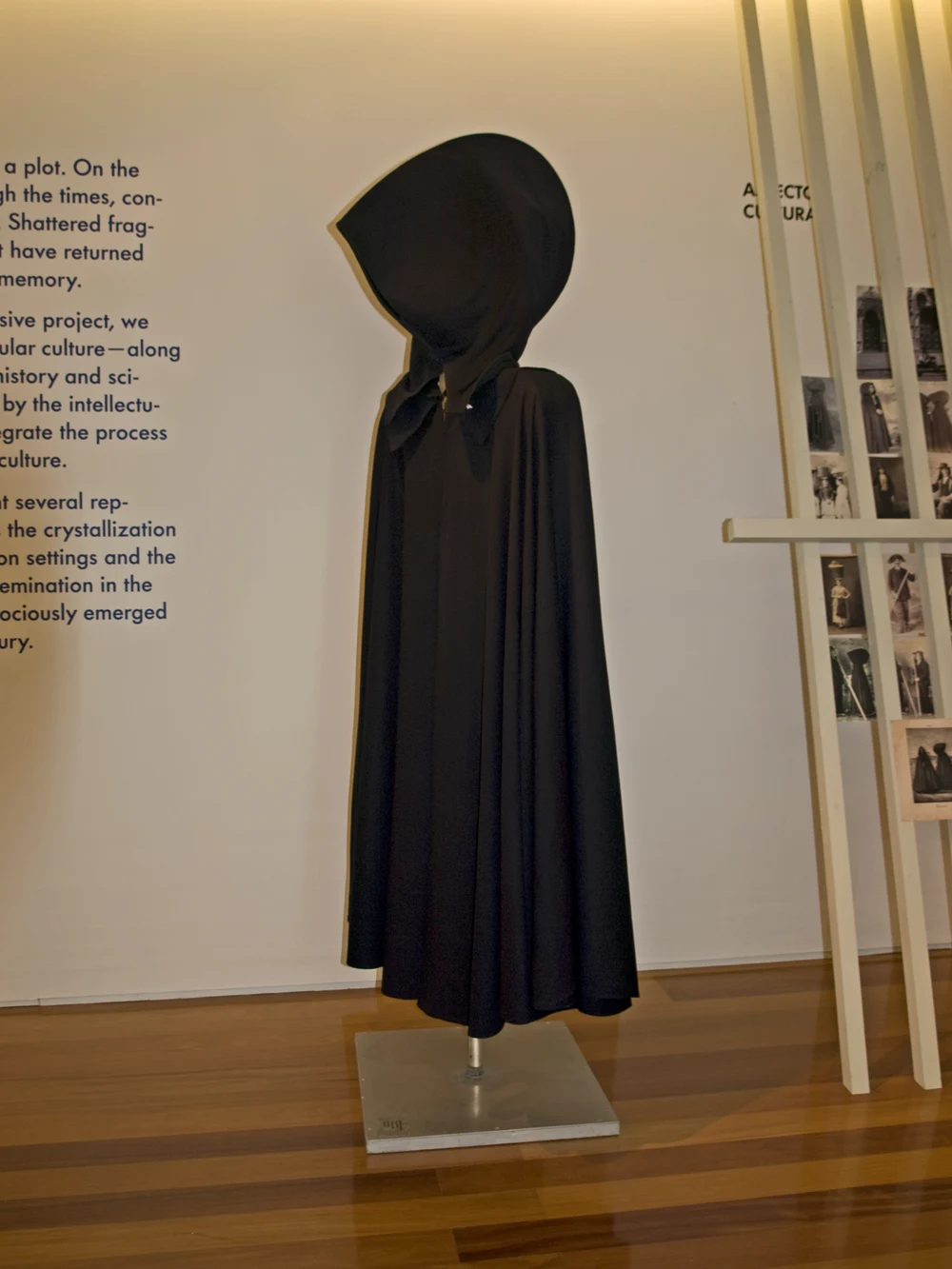
Museu Carlos Machado in Ponta Delgada, 17 July 2018. The profile of the hood shows how far it projects beyond the face. Ymblanter · CC BY-SA 4.0 The capote is the long cape and the capelo is its large head covering. Their proportions varied between islands. This ensemble could pass between generations within a household.
- Components and materials
- Heavy dark-blue or black cloth. The hood could have a metal or whalebone support and a hemp lining. Jewellery is not the defining feature of the outer garment.
- Who wore it
- Women wearing an enveloping outdoor garment. It could form part of a woman’s dowry.
- Period and use today
- Documented in early twentieth-century writing, including Raúl Brandão in 1926. Survives in museum collections and cultural representation rather than ordinary street dress.
-
Traje de campino
Ribatejo
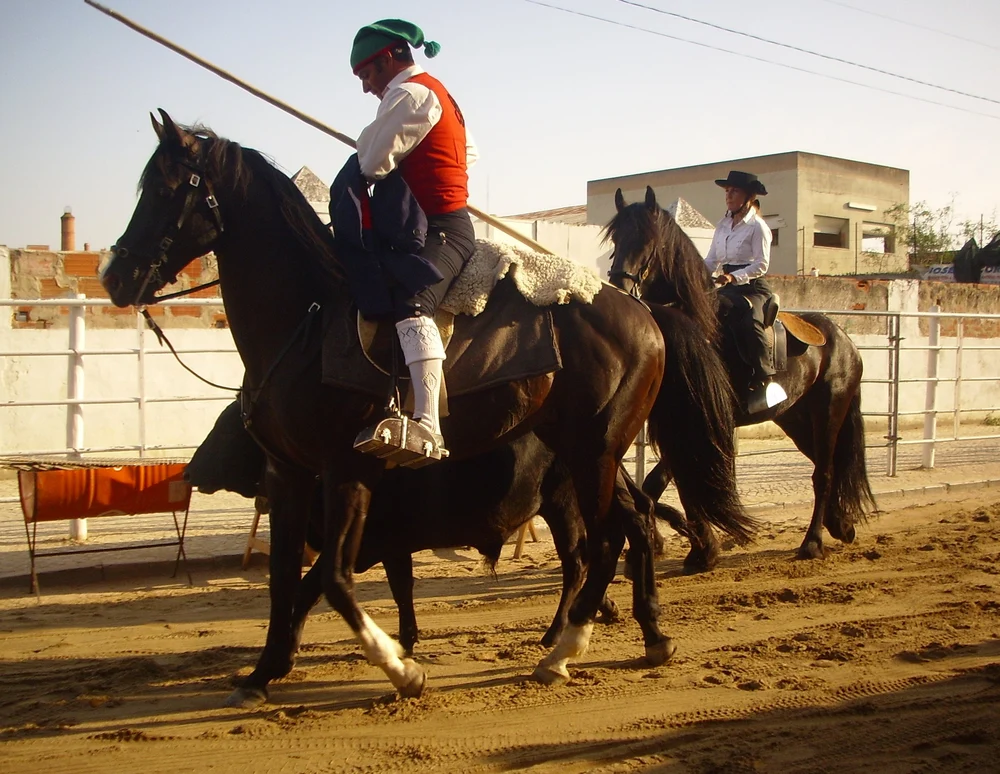
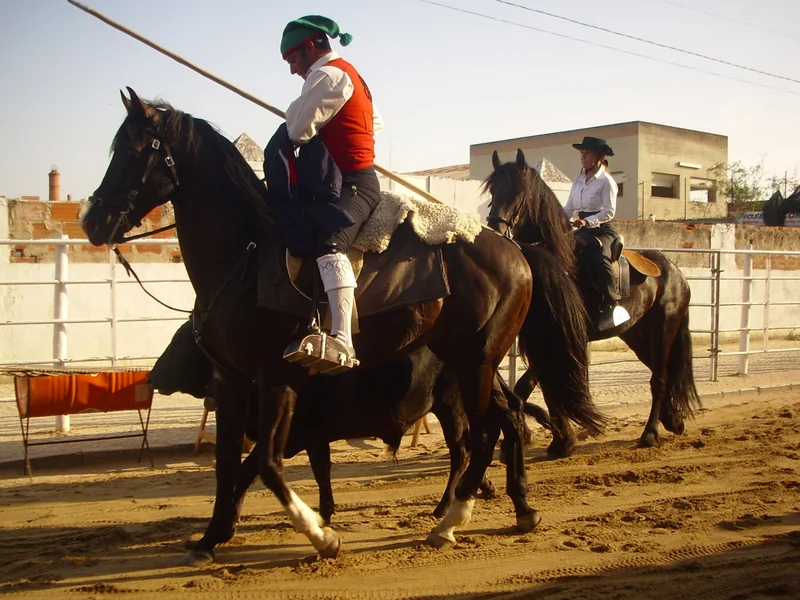
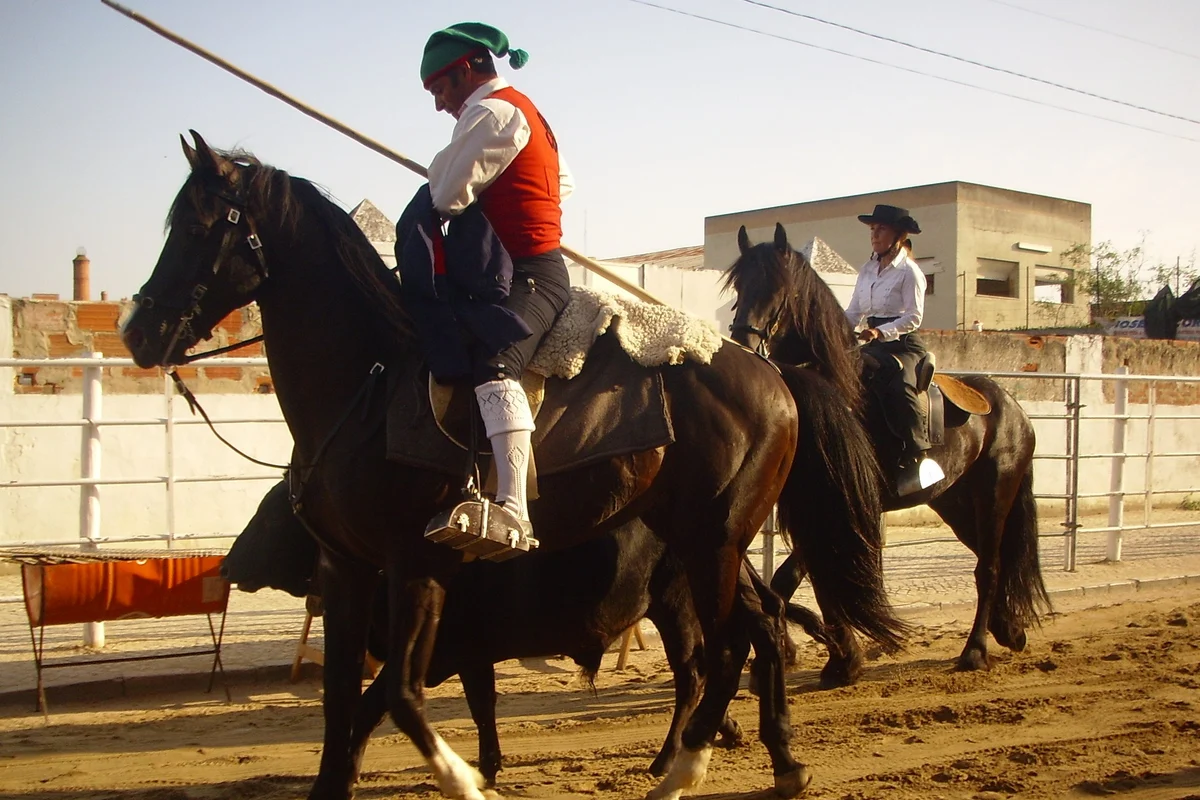
Montijo, 26 June 2010. Compare the foreground rider’s cap and stockings with the differently dressed rider behind him. F nando · CC BY-SA 3.0 A campino tends cattle in the Ribatejo countryside. The long pampilho is a cattle-handling pole. The dress shown at festivals identifies that occupation and its local culture.
- Components and materials
- Green cap with red edging, red waistcoat and sash, jacket, blue breeches, white knee stockings and shoes with spurs.
- Who wore it
- Male cattle workers. A rider in a black broad-brimmed hat may be wearing a different equestrian outfit, even in the same procession.
- Period and use today
- The Museum of Hat-making documents this ensemble in its 2014 collection presentation. It remains visible in rural festivals and equestrian events.
-
Pelico e safões
Alentejo
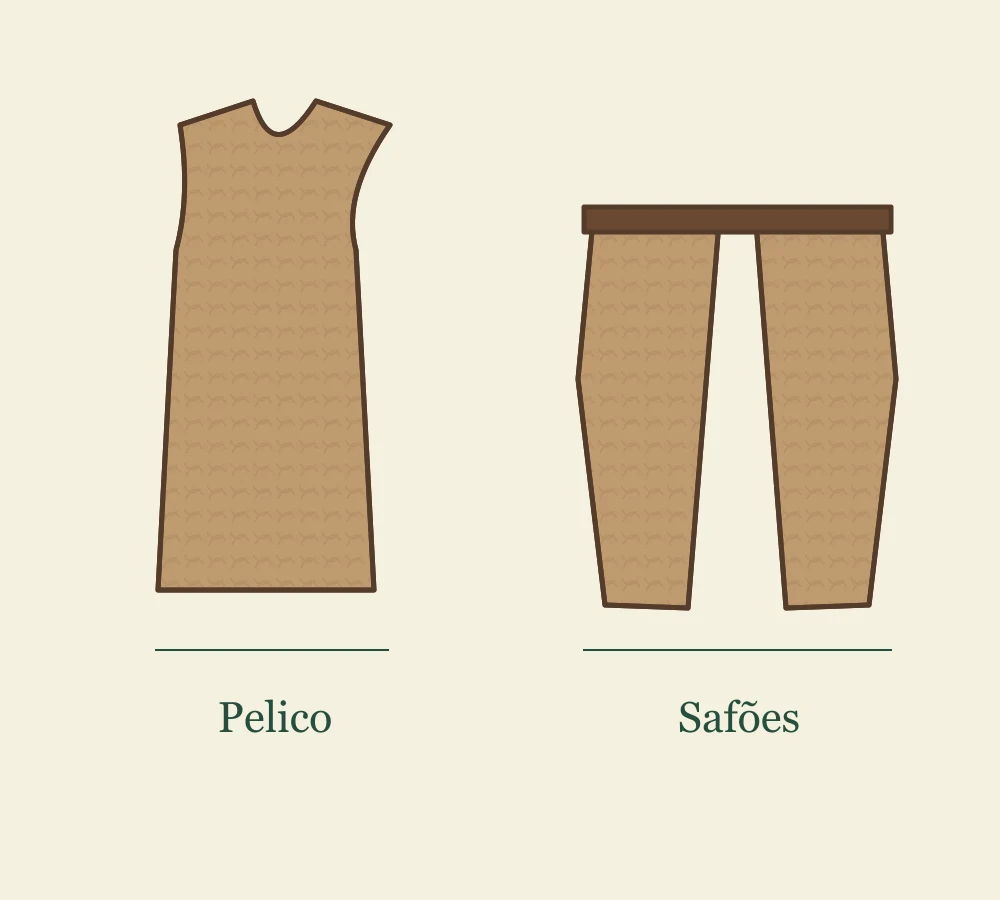
Portugal Notes diagram showing how the pelico covers the torso and the safões protect the legs. Portugal Notes · © 2026 Portugal Notes Shepherds wore the pelico over the torso and safões over the legs for protection while working outdoors. These sheepskin garments differ from the finer woollen capote worn on other occasions.
- Components and materials
- Animal skins, including sheepskin in the Alentejo examples recorded in Estremoz’s craft specification. The pelico covers the torso and safões protect the legs.
- Who wore it
- Shepherds and rural workers. Jewellery has no defining role in these work garments.
- Period and use today
- Examples of this rural clothing survive in collections and in Estremoz clay figures of working people.
-
Capa de Honras Mirandesa
Terra de Miranda · Trás-os-Montes
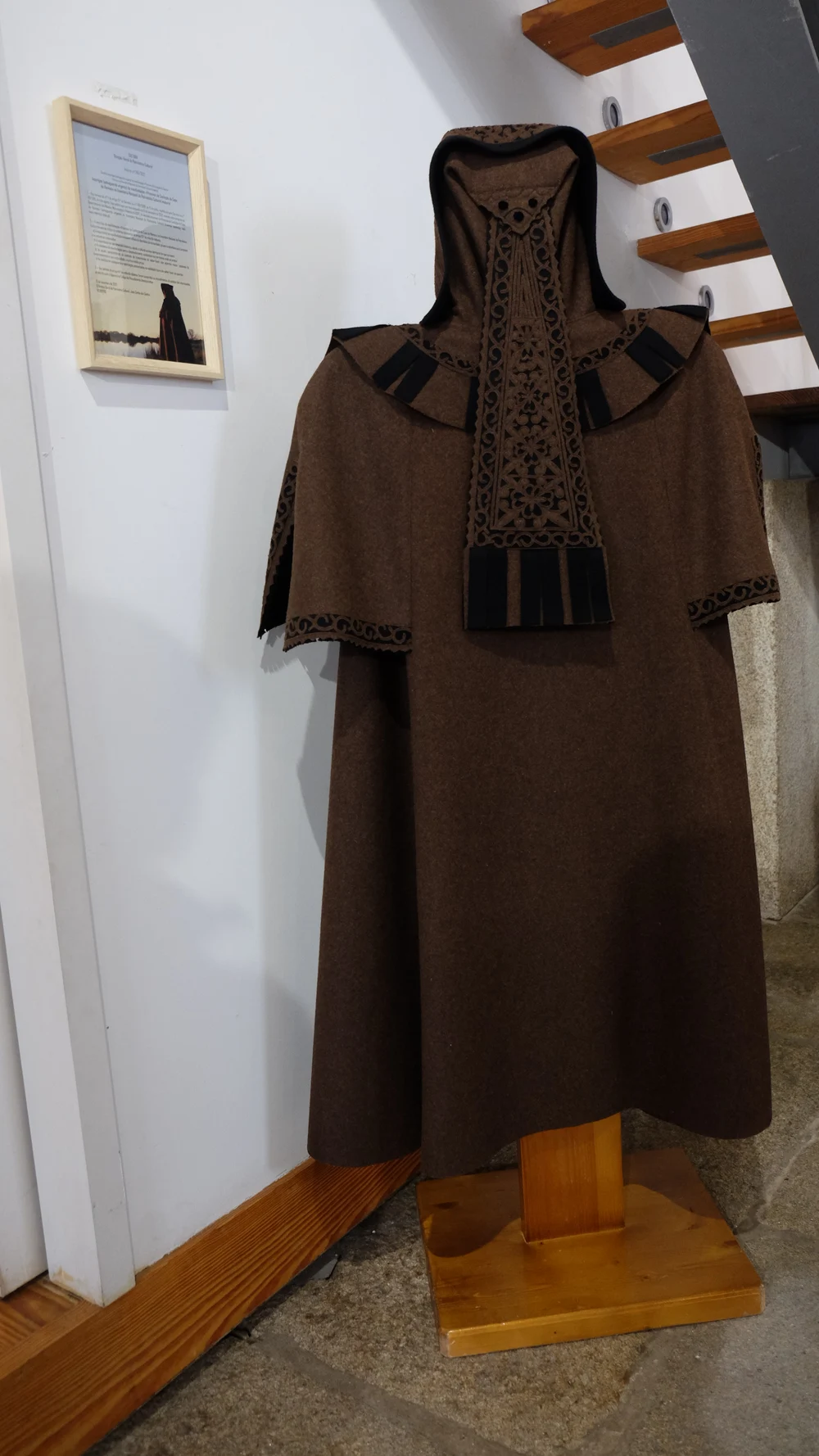
Miranda do Douro, 27 December 2022. The decorated hood extends into a long panel down the back. Josan07 ya · CC BY-SA 4.0 The Capa de Honras comes from Terra de Miranda, in the northeast of Trás-os-Montes. Its decoration is cut and stitched into the woollen cloth.
- Components and materials
- Dense wool cloth, traditionally burel. A long semicircular cape carries a short overcape, a hood and the hanging decorated honra.
- Who wore it
- Historically a male outer garment, also associated with social and ceremonial display. Its protection against cold and rain mattered.
- Period and use today
- The museum describes present manufacture with industrially produced cloth and skilled tailoring. Its exact origin is unknown, despite proposed medieval connections.
-
Bioco
Algarve
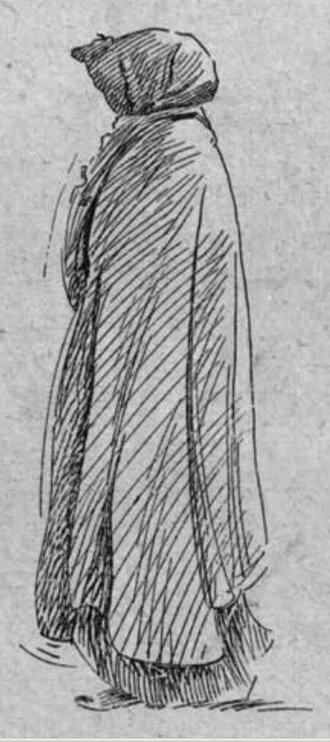
Published in O Archeólogo Português in 1918, copied by José Leite de Vasconcelos after Saavedra Machado. The drawing records one form of the covering. Original de Saavedra Machado (1887-1950), copiado por José Leite de Vasconcelos · Public domain The bioco covered the face and upper body. It is associated with the Algarve, where historical descriptions record several ways of constructing and wearing it.
- Components and materials
- Maria Veleda’s 1901 account describes a dark shawl folded and stiffened with paper. Other illustrations show a longer enveloping form.
- Who wore it
- Women going out in public. This was an outer covering, not a full account of the clothes or jewellery underneath.
- Period and use today
- Nineteenth- and early twentieth-century evidence survives. São Brás’s museum has also shown Joana Rocha’s colourful modern reinterpretations.
Did people wear festival clothing to work?
Lavradeira means a farming woman. The embroidered traje à lavradeira worn at festivals was her best clothing, with a decorated apron, fine blouse and gold jewellery. Viana’s museum distinguishes these outfits from the clothes worn for work or on an ordinary Sunday.
The black outfits worn by mordomas, women with ceremonial roles in religious festivals, and by brides had their own head coverings and arrangements of gold. Colours and embroidery also varied between parishes around Viana.
Have the clothes stayed unchanged?
The Viana museum traces the familiar ensemble’s formation from the 1870s and its stabilisation around the middle of the twentieth century. Hemlines, embroidery and imported printed scarves changed along the way. At Nazaré, the municipality records shorter skirts and aprons as fashions developed.
Folklore groups often reconstruct a particular place and period. Madeira’s folklore association trains makers to identify both, along with the outfit’s function, materials and techniques. A festival performance can therefore show a selected historical version of local dress.
Where did the capes come from?
Some origins remain unknown. The Museum of Angra does not establish where the Azorean capote began, despite the often-repeated Flemish attribution. The Museum of Terra de Miranda likewise leaves the origin of the Capa de Honras open.
Join the conversation
Add your Note
Sign in or create a free account to respond. Reading the conversation remains open to everyone.