People & Culture
Why Are There Ceramic Swallows on Portuguese Walls?
The birds are closely associated with Rafael Bordalo Pinheiro’s pottery in Caldas da Rainha, where they were being made in the late nineteenth century.
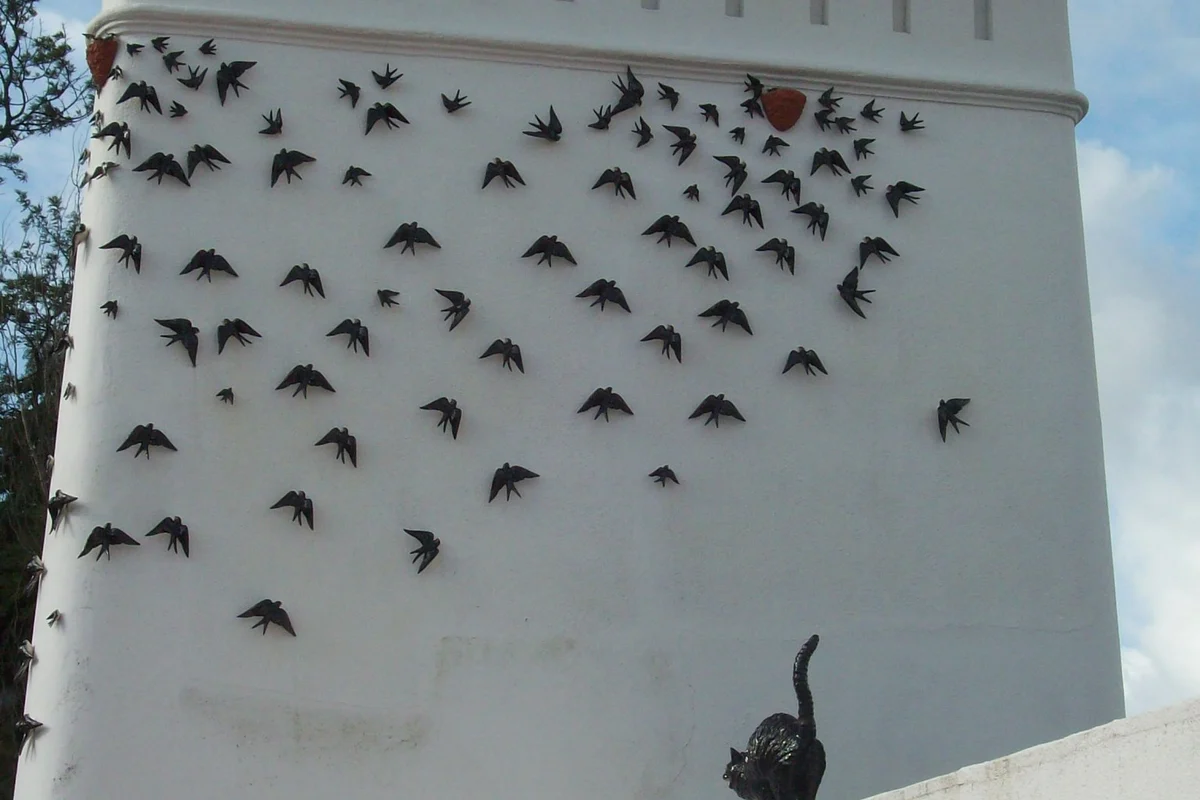
The ceramic birds fixed to Portuguese walls are andorinhas, or swallows. They are often arranged in small flocks, with wings at different angles. Bordalo Pinheiro’s designs helped make the bird a familiar decoration in homes, shops and public gardens.
Why did Bordalo Pinheiro make them?
Bordalo Pinheiro drew on plants and animals throughout his ceramics. At the Caldas da Rainha factory, swallows joined a repertoire of frogs, cats and vegetables. The Museu Bordalo Pinheiro places this work within naturalism, an artistic interest in the forms of the living world.
The museum credits him with designing and moulding the swallow, although no statement explaining his choice of this bird has been identified.
Dates behind the andorinha
-
The manufacturer Bordallo Pinheiro dates the design’s patent registration to 1896.
Bordallo Pinheiro · Coleção Andorinhas -
The birds spread onto façades and into Portuguese homes, as described by the Museu Bordalo Pinheiro.
Museu Bordalo Pinheiro · O regresso das andorinhas -
A Vida Portuguesa dates its reissue from the original moulds to this year in its own account published in February 2013.
A Vida Portuguesa · As andorinhas originais e populares, fevereiro 2013 -
Madalena Martins’s installation O regresso das andorinhas ran at the Museu Bordalo Pinheiro from 18 May to 14 October, showing the motif’s continuing use by artists.
Museu Bordalo Pinheiro · O regresso das andorinhas
Do they mean love, fidelity or homecoming?
Love, fidelity and homecoming belong to the way the swallow is interpreted today. In a Jornal de Leiria interview published on 12 February 2020, Bordallo Pinheiro’s artistic director Elsa Rebelo connected it with emigration and a return to one’s roots. That account explains the manufacturer’s modern symbolism, rather than a meaning recorded by the original designer.
Where can you see the birds beyond souvenir shops?
Lisbon’s Tabacaria Mónaco, on Praça Dom Pedro IV, has Bordalo Pinheiro swallows among its historic interior decorations. The government’s Comércio com História directory identifies them alongside his tiles.
In Caldas da Rainha, the official tourism route lists an installation of 60 black and white swallows on Rua Dr. Leão Azedo. Its enlarged ceramic displays bring the factory’s designs into the street. These installations show how the bird works in groups, with different sizes and angles suggesting flight.
Is every ceramic swallow an original Bordalo?
An original design and a 19th-century object are different claims. A newly made bird can follow a historic mould without being an antique. A Vida Portuguesa describes its own offering as made from Bordalo Pinheiro’s original moulds, while its account of the revival also distinguishes these from other popular versions.
For a purchase, ask who made the piece and whether it is a current production, a later interpretation or a dated historic object. The silhouette alone cannot establish its workshop or age.
Join the conversation
Add your Note
Sign in or create a free account to respond. Reading the conversation remains open to everyone.